
Blog Contents | Start | End | Previous: Berwick Heritage Blog Contents | Next: Maltings build cost increases by £5m
23rd September, 2026
In the light of the recent revelation that the Maltings build cost has gone up by £5m to £33.36m, requiring both Borderlands and NCC to increase their contributions yet again, it seems astonishing that apparently no one took sufficiently seriously the difficulties of building on this cliff-edge site with its poor access. Not to mention the quality of the soil, which is apparently so fragile – containing a lot of ancient waste – that archaeologists had to abandon much of their excavation. Builders who worked on the 1990 site commented last year that the original build was bad enough, and that attempting a larger building – with the increase in size of construction vehicles since then – was bonkers.
I believe a rejuvenated, perhaps sensitively extended Maltings would have been great for the town, and a lot less disruptive and risky. But the project has now turned into a financially and aesthetically ruinous, ravening monster that makes little sense for a town the size of Berwick. Partly, the current situation is due to politicians’ love of big, noisy capital projects rather than incremental improvements. It’s hard to get funding for renovation, which flies in the face of what we’re told about the need to conserve resources and repurpose what we have.
Once the idea of this rebuild had taken hold, those involved became ruthless in the pursuit of the grand scheme. With the opportunity to signal virtue from a modernised Berwick skyline, nothing – certainly not county councillors, nor the physical limitations of an inappropriate location – would be allowed to stand in its way.
Are NCC officers stupid or strategic? They are a lot of things, but perhaps not dumb. In the August 2025 committee meeting video, you’ll find an awareness of the problems with the site as they congratulate themselves on keeping the building in the centre of town, challenges notwithstanding. So they knew that this would cause the project to become more expensive than if built on a more appropriate site. Here’s Rob Murfin, chief planner at NCC:
“To be honest, an easy solution would have been to go out of town. It would have been cheaper and without constraint. This is trying to do that thing of fitting in not just a quart into a pint, whatever the term is, but actually given a functional modern building that acts as an anchor for the town centre.”
So apparently it would have been easy to fix all the problems that are now coming home to roost, but they deliberately chose the most expensive and aesthetically damaging route instead. What wonderful overlords we are blessed with, deciding how our town should look and how our hard-earned money should be spent from their desks in Morpeth.
I suspect that cost hikes to the local taxpayer were always factored into their thinking. Get the councillors to agree an initial cost; when costs increase, steal from other budgets and obtain agreement for a modest increase. Then rinse and repeat.
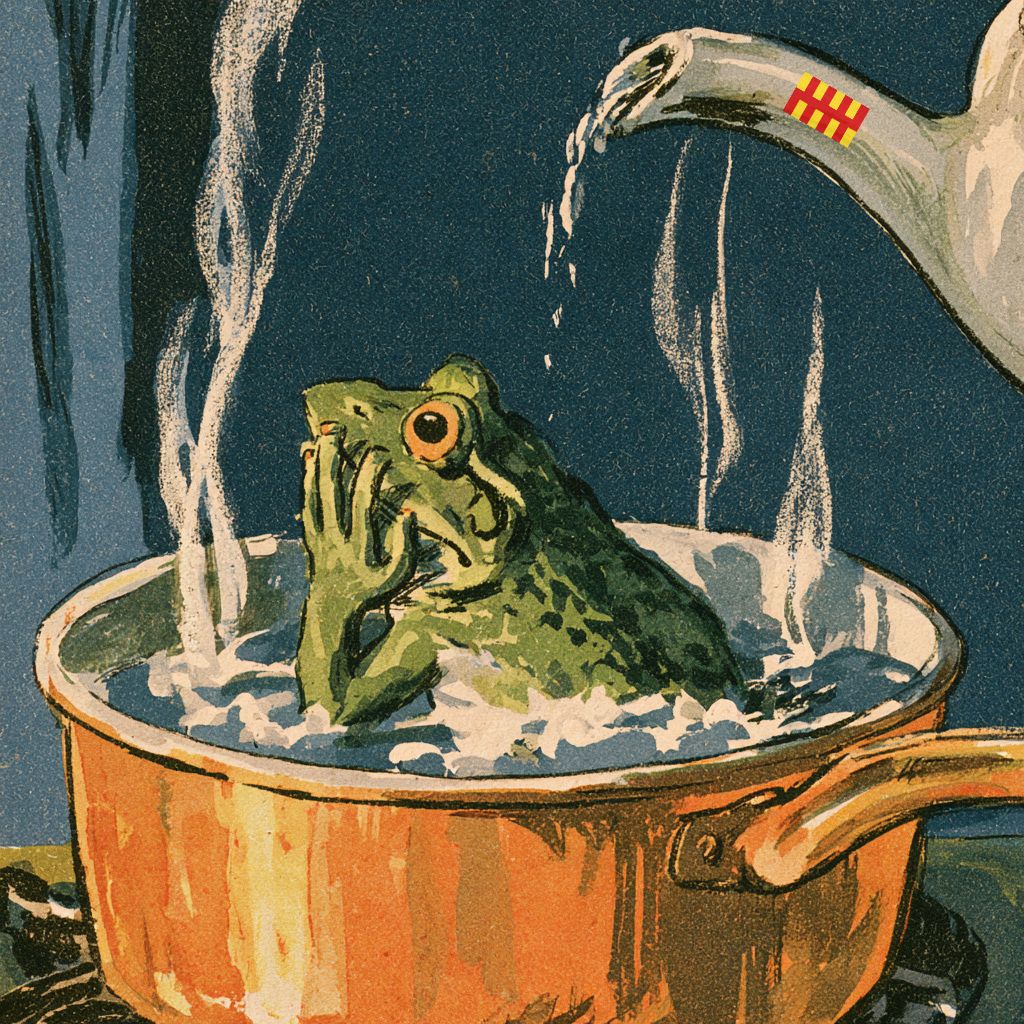
In other words, county councillors are boiled frogs, each increment in itself being relatively small and not likely to make them jump out of the pan. The councillors seem to be held in contempt by the officers, who easily manipulate them and are the driving force behind big decisions – not the councillors. To quote a prominent county councillor who is unhappy with this democratic deficit, the council is “officer-led”.
The power imbalance is built right into the HQ meeting room layout, clear from committee videos where you see the officers lined up on a high platform, looking down their noses at the lowly councillors and guiding them with leading remarks. For example, the supposedly objective planning case officer referred to the “fake sloped roofs” and remarked that Historic England and the conservation officer “were both satisfied with the proposal”. In reality, the Historic England regional inspector had been deeply involved in the design and was therefore not independent, and the conservation officer gave a far more nuanced response that acknowledged harm.
So, when the project has reached what looks like the point of no return, it really doesn’t matter what you ask them to approve. Councillors don’t want to look like Negative Nellies. The project is too big to fail. Social pressure, groupthink and an eye on re-election all make for obedience. An ignorance of the sensitivities of Berwick’s built environment – some councillors having barely even visited the town – is also a factor.
What looked like a massive freebie becomes instead a drain on NCC’s resources – when the county is in debt to the tune of nearly £900m, or around £2,710 per resident (£5,500 per household). By way of comparison, County Durham has a population over fifty percent larger than Northumberland, yet through conservative fiscal policy it has kept its debt level to a little over £400m, or about £800 per resident. But NCC would like even more cash from each of us, to fund its grandiosity.
Is there a limit to the frog-boiling? How much boiling would be too much for councillors? It would be an interesting thought experiment to posit numbers that might finally give them pause. But the true final figure is never presented until it’s too late. I think in November when it comes to approve the funding, they will be brought into line by the council officers and the fear of upsetting the apple-cart.
This is how disasters are allowed to unfold, even when the writing is on the wall. The extraordinary prediction of over 300,000 visits annually by 2031/2032, and even the paltry national Benefit-Cost Ratio of 1.04, are bound to be optimistic guesswork to help secure funding. The fancy metrics and impressive-sounding verbiage in council and Borderlands reports give plausible deniability: councillors can be shocked when things go pear-shaped later, because they weren’t expected to use their own brains but to rely on the reassurances of bureaucrats. It’s bound to be someone else’s fault, and there’s safety in numbers if we all vote the same way, right?
Whether blundering on with this project will go down well over the next few years with councillors’ tax-weary, construction-dust-covered constituents, remains to be seen. Meanwhile, NCC officers are heating up the water down at HQ.